Community Fundraising Ideas for Local Culture Projects
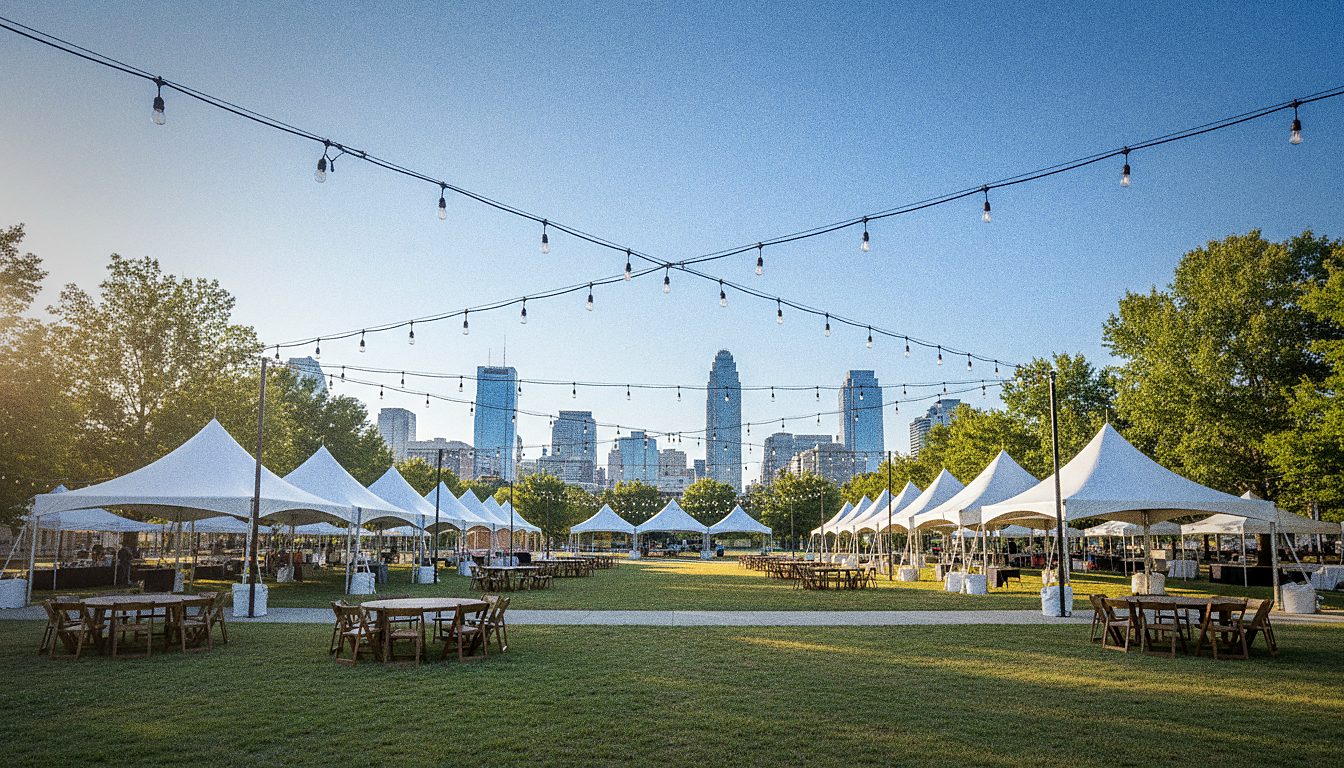
A gala dinner works well for an organization that already has a mailing list of wealthy donors and the staff time to run a formal event. It works badly for almost everyone else, because the fixed costs — venue, catering, printed materials — can eat a third of the money raised before a single donation is counted. Most local culture projects fall into the second group, and need formats that scale down without losing legitimacy.
Formats that fit a small budget
The common thread across formats that work at a small scale is low fixed cost relative to the amount raised, and a reason for people to show up that isn't purely "please give us money."
Low-cost, high-turnout formats
- Open studio or open rehearsal nights — free or pay-what-you-can entry, donation box at the door, no catering budget required beyond simple refreshments
- Silent auctions built entirely on donated items — local businesses will often donate goods or services for the visibility, meaning the entire proceeds go to the project
- Matching-gift campaigns tied to a single deadline — one committed major donor agrees to match every dollar raised in a set window, which reliably increases small-donor giving because the impact of a modest gift is doubled
- Crowdfunding with a specific, named goal — "$4,000 to restore the community mural" performs consistently better than an open-ended "support the arts" appeal, because donors can see exactly what their contribution completes
Timing a campaign
Culture-project fundraising performs noticeably better when it's tied to something happening soon, rather than run as an ongoing, undated appeal. A campaign with a hard deadline — the opening night of an exhibition, the start of a school program, the anniversary of the organization — gives donors a reason to act now instead of filing the request away for later, which in practice means never.
Worth knowing: campaigns with a visible progress bar and a firm end date consistently outperform open-ended appeals, even when the total ask is identical — donors respond to urgency and to seeing the gap close.
Choosing between formats
| Format | Typical fixed cost |
|---|---|
| Gala dinner | High — venue, catering, printing; only worth it above a certain donor base |
| Open studio night | Low — space is usually already owned or rented for other purposes |
| Silent auction (donated goods) | Low — mainly volunteer time to solicit items |
| Matching-gift campaign | Low — requires one committed major donor, no venue needed |
| Crowdfunding with a named goal | Low, plus a small platform fee on funds raised |
Getting the ask right
Small culture projects often underprice their own ask out of a sense that the community can't give much. In practice, a specific, well-justified request performs better than a vague one, even at a higher dollar amount — donors give more confidently when they understand exactly what the money buys and can see it's a realistic, calculated figure rather than a round number picked for convenience.
What keeps donors coming back
The projects that manage to fundraise successfully year after year, rather than starting from zero each time, are almost always the ones that report back on what the previous campaign actually funded — a photo of the finished mural, attendance numbers from the program the grant paid for, a short thank-you that names the specific outcome. That single follow-up step does more for long-term fundraising health than almost any amount of pre-campaign marketing, because it turns a one-time donor into someone who already trusts the next ask before it's even made.
Recruiting the volunteers who actually make it happen
Almost every one of these formats depends on volunteer effort that's easy to underestimate when planning — soliciting silent-auction donations, staffing an open studio night, or simply spreading the word about a crowdfunding campaign in the first critical days. A campaign that assumes this effort will simply materialize tends to underperform even when the format and timing are otherwise right.
Roles worth assigning explicitly, not leaving informal
- A donation solicitor — one person responsible for approaching local businesses for auction items, rather than leaving it to whoever has time, tends to secure noticeably more donated goods
- A single point of contact for the campaign — donors and the press respond better to one named organizer than to a general organizational email address
- Someone dedicated to the first 48 hours — early momentum on a crowdfunding campaign strongly predicts its final total, so the first two days deserve a dedicated push rather than a slow ramp-up
- A dedicated thank-you writer — separating this from the person running the campaign logistics means the follow-up step described above actually happens on schedule rather than getting deprioritized once the campaign itself wraps up
A realistic small-project example
A neighborhood arts collective aiming to restore a community mural might combine several of these approaches rather than relying on just one: a matching-gift pledge from a single supportive local business to anchor the campaign, a crowdfunding page with a specific $4,000 goal and a firm six-week deadline, and an open studio night near the campaign's midpoint to build visibility and collect a handful of larger in-person gifts. None of these elements individually needs a large budget or a dedicated events staff — the combination is what tends to produce a result larger than any single format would achieve alone, precisely because each piece reinforces the others: the matching gift gives the crowdfunding page credibility, and the open studio night gives donors who found the campaign online a reason to actually show up and see the project in person.
When to say no to a format
Not every organization needs every format on this list, and trying to run all of them at once in a single year usually produces a weaker result than doing one or two well. A first-time fundraising committee with limited volunteer capacity is generally better served choosing a single well-executed crowdfunding campaign with a matching-gift anchor than attempting a silent auction, an open studio night, and a crowdfunding page simultaneously — spreading volunteer attention across three formats at once tends to leave all three under-resourced rather than any one of them genuinely strong.