Supporting Local Artists: Practical Ways Communities Can Help
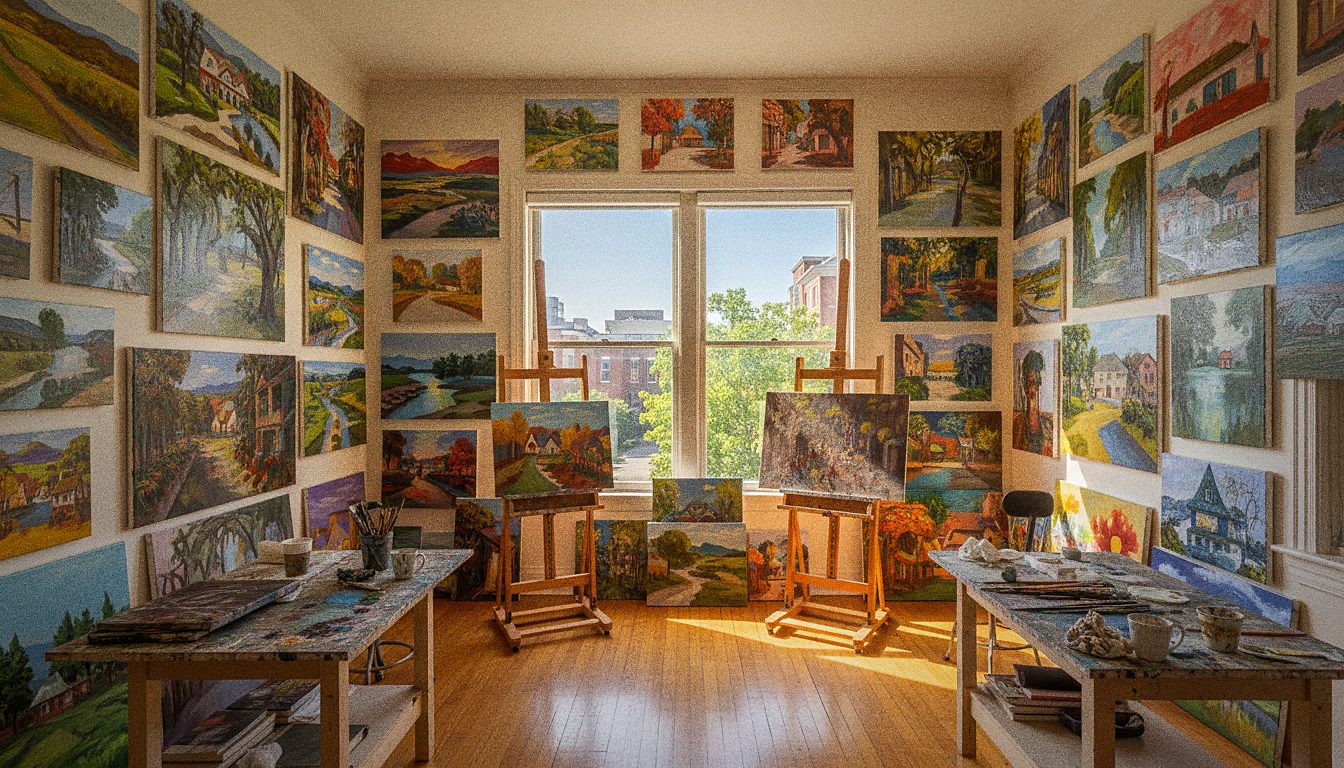
Buying a piece of art once a year feels like support, but it does almost nothing for a working artist's actual stability. Income for most local artists is irregular by nature — a good month can be followed by three slow ones — and the interventions that genuinely help are quieter and more structural than a single purchase: affordable space, steady small commissions, and visibility that leads to repeat work rather than a one-off sale.
What actually moves the needle
Space and overhead
- Below-market studio space — a vacant storefront or unused municipal building offered at reduced rent does more for a working artist's monthly budget than almost any grant, because it removes a fixed cost rather than adding a one-time gift
- Shared equipment access — a community kiln, printmaking press, or woodworking shop that individual artists can't afford alone but can access through a shared community facility
- Utilities and insurance support for organizations that run shared studio buildings, since these overhead costs are the ones that most often force a shared space to close
Steady work, not one-off purchases
A single sale helps for a week. A standing relationship — a café that rotates local art on its walls with a modest stipend, a local government that commissions rotating public installations rather than one permanent piece, a business that hires the same illustrator for its seasonal materials — gives an artist something closer to a client relationship than a transaction.
Worth knowing: a modest but recurring commission (a quarterly mural rotation, a standing illustration contract) tends to matter more to an artist's actual financial stability than a single larger one-time payment of similar total value.
Ways different groups can help
| Who | What they can realistically do |
|---|---|
| Local government | Percent-for-art requirements on new public buildings, reduced-rate studio leases in underused municipal property |
| Small businesses | Rotating art displays with a stipend, hiring local artists for signage and seasonal design instead of stock imagery |
| Community groups | Shared equipment co-ops, open critique nights, bulk-buying materials at a discount for members |
| Individuals | Commissioning directly instead of buying only pre-made work, sharing an artist's work with a specific person who might commission them |
Visibility that leads somewhere
Exposure is often offered as a substitute for payment, and artists have good reason to be wary of that trade — but genuine visibility, paired with fair payment, is still valuable. A well-organized open-studio weekend, a local press feature tied to an actual sale opportunity, or inclusion in a curated show with a modest honorarium all convert into future paid work far more reliably than an unpaid "exposure" request ever does.
What to avoid
The most common well-intentioned mistake is treating support for artists as charity rather than as paying fairly for real work and real expertise. A community that frames its relationship with local artists as ongoing paid collaboration — not an annual act of generosity — tends to keep those artists working and living locally for far longer than one that treats each interaction as a one-time favor.
Why artists leave — and what keeps them
A community loses its working artists gradually, usually for the same handful of reasons: rising studio costs that outpace irregular income, a lack of steady work that forces artists to take unrelated full-time jobs that leave no time or energy for their practice, and a sense that the community values the finished work more than the person making it. None of these are dramatic, single-event departures — they're slow attrition, which makes them easy for a community to miss until the pattern is already well established.
Signals worth watching for
- Shared studio buildings losing tenants to cheaper spaces outside the area, even when those spaces are objectively less convenient
- Local artists increasingly describing their creative work as a "side project" rather than their primary occupation
- A shrinking pool of artists willing to take on public commissions, often because the payment offered hasn't kept pace with the actual time required
Communities that successfully retain a working artist population tend to treat these signals as early warnings worth acting on — adjusting commission rates, protecting affordable studio space before it disappears — rather than waiting until an artist has already relocated to notice that something in the local support structure wasn't working. The intervention that prevents the loss is almost always cheaper and easier than the one that tries to reverse it after the fact.
Starting small when resources are limited
A community group or small business that wants to help but has no budget for stipends or rent subsidies still has real options. Offering wall space for a rotating display, sharing an artist's work with a specific contact who might commission them directly, or simply committing to buy holiday and event gifts from local makers instead of default retail options all cost nothing beyond a small shift in existing habits, and collectively they add up to real, if modest, support for a local creative economy that a single larger gesture from one source rarely matches on its own.
A note on fair pricing conversations
Many well-meaning supporters unintentionally undercut local artists by expecting a discount that wouldn't be asked of any other professional service. Treating an artist's quoted price the way one would treat a contractor's or a designer's — as a real professional rate rather than a starting point for negotiation — is itself a meaningful, no-cost form of support, and one that individual buyers and small organizations can practice immediately without waiting for any larger structural change in how a community funds its creative sector.
This matters even in casual, non-commissioned interactions — asking for a "friends and family discount" on a piece already fairly priced, or expecting a free custom piece in exchange for social media exposure, both carry the same underlying assumption that an artist's time is worth less than a comparable professional's. Communities that quietly normalize paying artists fairly, without special pleading in either direction, tend to keep more working artists living and creating locally over the long run than communities that treat every transaction as inherently negotiable.