What Dracula Land Gets Right About Family Arts Days
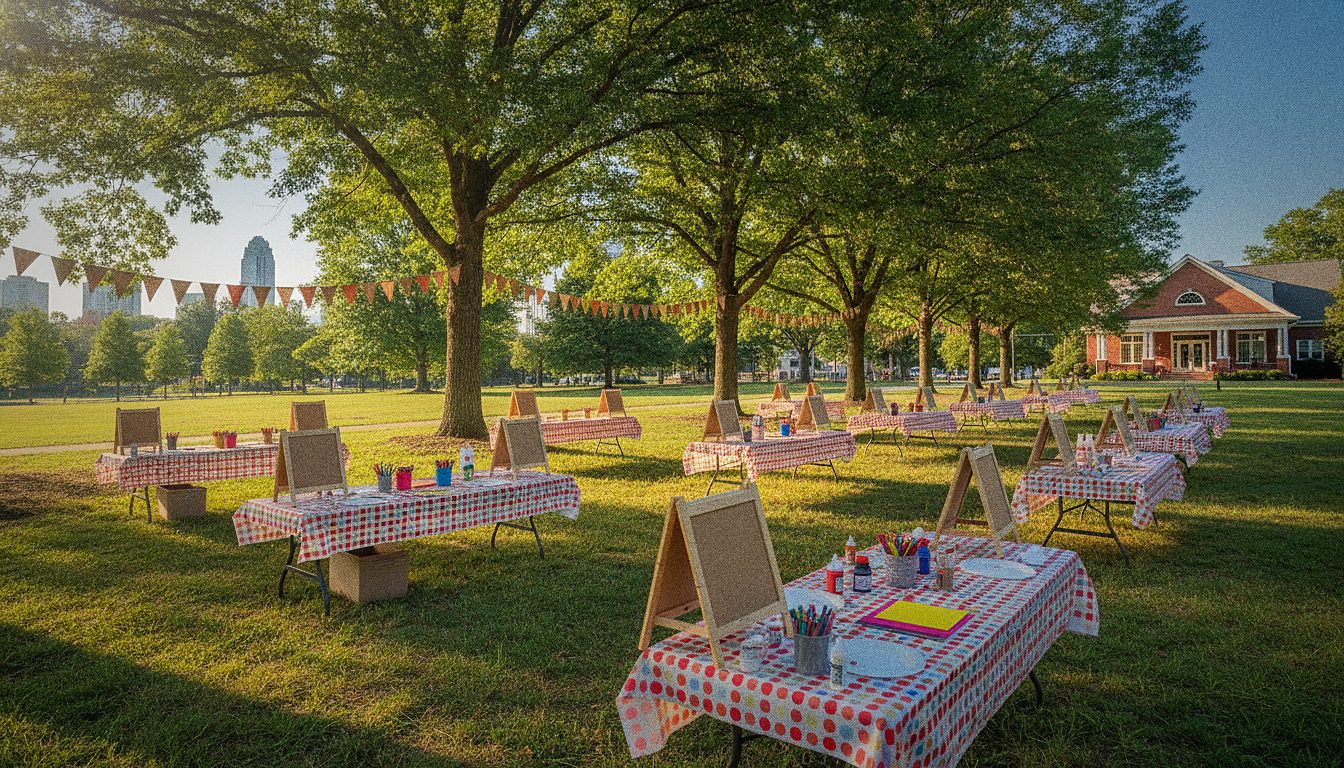
A community "family arts day" often looks nothing like a successful family theme park visit, even though both are trying to solve the same underlying problem: keeping a mixed-age group, from toddlers to grandparents, genuinely engaged for several hours without any one age group getting bored or overwhelmed. Theme parks have this down to a science worth borrowing from.
The problem both formats are solving
A family arts day organized around a single activity — one craft table, one performance — loses half its audience within twenty minutes, because a five-year-old and a twelve-year-old rarely stay engaged by the same thing for the same length of time. Successful family attractions solve this with parallel tracks, not a single shared activity.
What theme parks do that community events usually skip
- Multiple simultaneous activity zones, so different age groups can self-select into what actually holds their attention, rather than the whole family following one schedule
- Clear, visible wayfinding — a simple map or zone layout that lets a family plan their own path rather than wandering to find out what's available
- Built-in rest points with seating and shade, recognizing that adults and younger children tire at a different rate than older kids
- A mix of drop-in and scheduled elements — some activities that run continuously so latecomers aren't excluded, alongside a few scheduled highlights that create a reason to plan around a specific time
Worth knowing: a clearly printed or posted schedule with zone locations, even a simple one-page version, measurably increases how long families stay at a community event — uncertainty about "what's next" is one of the fastest ways to lose a family with young children.
Applying it at community scale
| Theme park approach | Community arts day equivalent |
|---|---|
| Parallel activity zones | Separate stations for different age ranges — a toddler craft corner, a hands-on activity for school-age kids, a performance area for the whole group |
| Wayfinding and maps | A simple printed layout at the entrance, even hand-drawn, showing where each activity is |
| Rest points | Shaded seating placed between activity zones, not just at the edges of the event |
| Drop-in plus scheduled elements | Continuous craft stations alongside one or two timed performances that anchor the day |
Researching a working example firsthand
For an organization planning its first large family event, visiting an established family attraction as a working research trip — not just a fun outing — can be genuinely useful: watching how a well-run attraction manages queuing, rest points, and parallel activities in practice often surfaces practical details a written case study misses. Dracula Land is one such destination worth observing specifically for how it structures a themed day for a genuinely wide age range, from small children to teenagers, without losing either end of that range.
What not to copy directly
A commercial theme park has a budget and staffing scale a community arts organization will never match, and trying to replicate the production value directly usually backfires. The transferable lesson isn't the scale — it's the underlying structure: parallel options for different ages, clear navigation, built-in rest, and a mix of always-available and scheduled activities. A community event that borrows that structure, even on a small volunteer-run budget, holds a mixed-age crowd far longer than one built around a single shared activity for everyone at once.
Volunteer staffing for a multi-zone event
The parallel-zone structure that makes a family arts day work well also multiplies the number of volunteer roles needed to run it, which is worth planning for explicitly rather than discovering on the day of the event. A single-activity event might run comfortably with four or five volunteers; a properly zoned family day with three or four parallel stations typically needs closer to ten to twelve to keep every zone staffed and to cover breaks.
Roles to assign ahead of time
- A dedicated lead for each activity zone, responsible for supplies and pacing at that station specifically, rather than one person trying to oversee everything
- A roaming "wayfinder" volunteer whose only job is helping families figure out where to go next — genuinely useful even with good signage, especially early in the event before people have gotten their bearings
- A volunteer specifically covering rest-point areas, checking supplies and tidying, since these spaces get heavy use and are easy to overlook when planning staffing
- A single event-day coordinator with the authority to redirect volunteers if one zone is unexpectedly busier than another, since attendance patterns rarely match the plan exactly
A short debrief pays for itself next time
A fifteen-minute volunteer debrief right after the event, while details are still fresh, is consistently skipped by organizations running their first family day and consistently valued by organizations running their fifth. Which zone had the longest wait, which activity ran out of supplies too early, where families seemed to bottleneck — this kind of specific, immediate feedback is far more useful captured the same day than reconstructed weeks later from memory when planning begins for the following year's event.
Budgeting a family day realistically
A common early mistake is under-budgeting for supplies at the activity most likely to be popular with younger children, since that's usually the zone that runs through materials fastest. Estimating supply needs against realistic attendance projections, with a genuine buffer rather than a bare minimum, avoids the specific failure mode of a craft station running out of materials an hour into a multi-hour event — which does more damage to families' experience of the day than almost any other single planning mistake, since it's highly visible and directly affects the youngest attendees.
Where the budget usually needs to go
- Consumable craft and activity supplies, budgeted with a real buffer above the expected headcount
- Shade and seating rental if the venue doesn't already have adequate covered rest areas
- Simple printed wayfinding materials — a one-page map costs very little and measurably improves how long families stay
- A modest contingency for weather, if any part of the event is outdoors, even when the primary plan is indoor or covered