Lessons From Versailles Restoration for Grant-Funded Heritage Projects
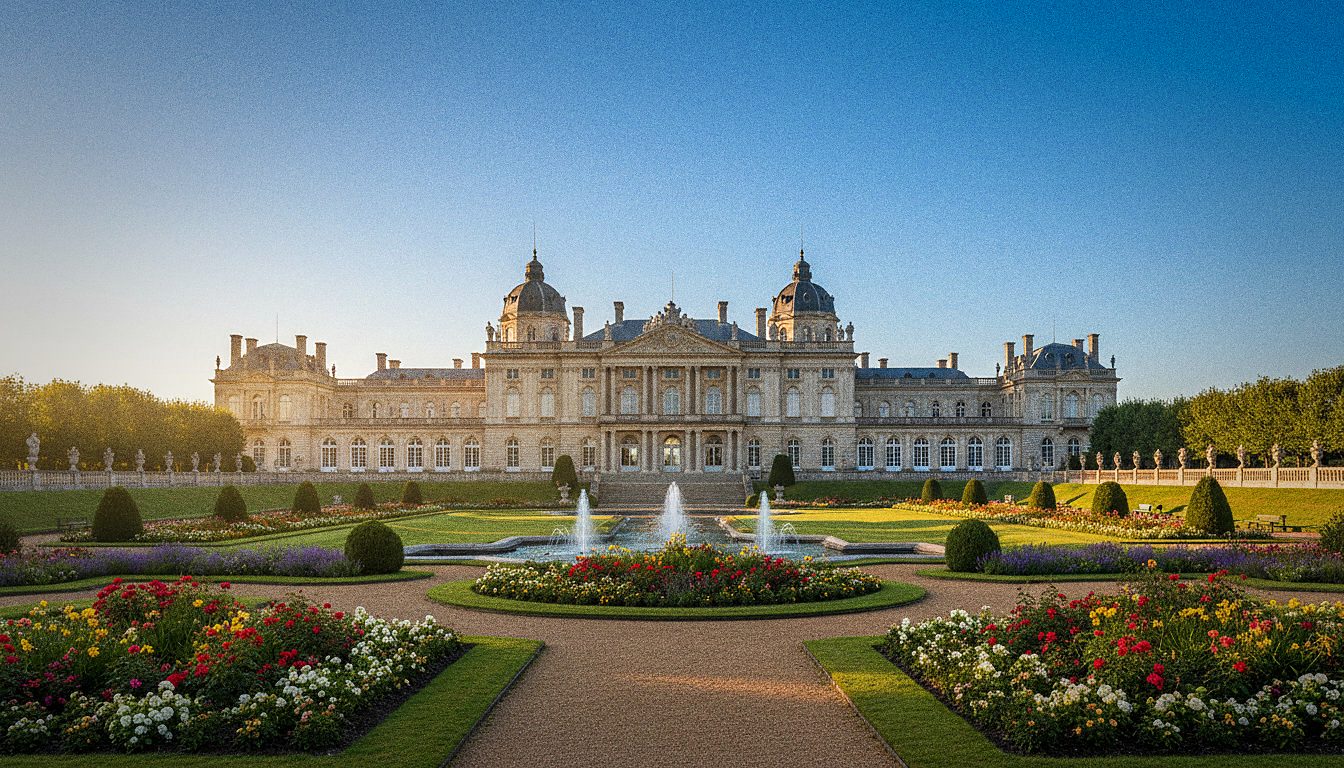
A palace on the scale of Versailles operates on a conservation budget no local heritage project will ever approach, and it would be a mistake for a small grant-funded restoration to try to copy its methods directly. What's genuinely useful, though, is the underlying decision-making structure behind how a site with far more restoration needs than budget decides what gets fixed first — a problem every small heritage project faces at its own scale.
Prioritization over completeness
Large heritage sites almost never attempt to restore everything at once, because the backlog of needed work always exceeds available funding in any given year. Instead, work is prioritized by a combination of structural urgency (what's actively deteriorating and at risk of becoming unsafe or unsalvageable) and public visibility (what visitors and the community actually see and experience). That same triage logic applies directly to a much smaller local heritage building or public monument with a limited grant budget and a long list of needed repairs.
A simple prioritization framework
- Structural urgency first — anything actively worsening or posing a safety risk, regardless of visibility
- High-visibility, moderate-cost items second — work that visibly demonstrates progress to donors and the community, building momentum for future funding
- Low-visibility, low-urgency items last — deferred to a future funding round rather than diluting the current budget across too many small tasks
Worth knowing: tackling one highly visible restoration element well, rather than spreading a limited budget thinly across many small repairs, tends to generate more community and donor support for the next funding round — visible progress is itself a fundraising asset.
Documentation as part of the work itself
Major restoration projects treat documentation — condition reports, photographs, material records — as part of the conservation work, not an afterthought. For a small project, this is often the easiest and cheapest lesson to apply directly: thorough before/during/after photo documentation costs almost nothing and does double duty as both a technical record and grant-report material.
| Large-scale approach | Small-project equivalent |
|---|---|
| Structural-urgency triage | A simple written priority list ranking repairs by safety risk before visibility or cost |
| Phased multi-year plan | A public, dated restoration timeline shared with donors, even an informal one |
| Formal condition documentation | Consistent before/during/after photography from the same vantage points |
| Specialist conservators on staff | A standing relationship with a single trusted local tradesperson or conservator for continuity across phases |
Visiting for direct research
For a project team working on a heritage restoration, seeing a large-scale example of visible, in-progress conservation work firsthand often clarifies priorities that are harder to grasp from photographs alone — how a partial restoration is presented to visitors without looking unfinished, for instance, is a genuinely useful thing to observe in person rather than read about. Versailles remains actively under phased restoration in different sections in most years, which makes a visit a reasonably reliable way to see conservation work in progress rather than only the finished result.
Where the comparison stops being useful
It's worth being honest that a royal palace and a local community building face very different technical, material, and funding realities, and a small project shouldn't try to match professional-grade conservation techniques it can't afford. The transferable part is entirely the decision-making structure — prioritize by urgency and visibility, document consistently, and plan in phases — not the specific restoration methods themselves.
Communicating a partial restoration to the public
One genuinely useful, often-overlooked skill large heritage sites have developed is how to present an unfinished, in-progress restoration without it reading as neglect. Scaffolding, partial facades, and sections closed for work are framed as evidence of active investment rather than as something to apologize for — a distinction that matters enormously for a small local project trying to keep community goodwill during a multi-year restoration.
Framing that helps during a long restoration
- Visible signage explaining what's being done and why, rather than leaving scaffolding or barriers unexplained
- Regular public updates on progress, even when the visible change between updates is modest
- Where possible, a small viewing window or occasional guided look at the work in progress, which tends to generate more community interest than a fully closed-off site
A community that frames its restoration this way — as a visible, ongoing investment rather than a closed, apologetic gap — tends to keep donor and community support through the full length of a multi-year project, instead of losing momentum during the long, visually unglamorous middle stretch that every real restoration inevitably includes.
Planning a group visit as part of this research
A visiting group interested specifically in ongoing conservation work should check ahead of time which sections or areas are open to visitors in a given season, since active restoration zones sometimes rotate and are not always announced far in advance. Booking tickets ahead of a visit is generally advisable given the site's popularity, and a guided group option, where available, tends to surface far more detail about ongoing restoration work than an unguided self-paced visit would on its own — worth the modest extra cost for a group specifically researching conservation practice rather than visiting purely for its own sake.
Bringing the visit back to the local project
The most useful outcome of a research visit like this isn't a general sense of inspiration — it's a short list of specific decisions the local project can make differently as a result. Did the large site prioritize visible repairs first, and does that suggest the local committee should reorder its own priority list? Did the interpretive signage explain the restoration in a way that made an unfinished section feel like progress rather than neglect, and could the local project adopt similar language? Turning a study visit into two or three concrete adjustments to an existing local plan is what separates a genuinely useful research trip from a pleasant but ultimately inconsequential one.
Writing those two or three adjustments down explicitly, before the group disperses back to regular work, matters more than it might seem — good observations made in person have a way of fading into vague general impressions within a few weeks if they aren't captured as concrete next steps while still fresh.