Free Trail Networks or Ticketed Walkways: What Funds a Path Long-Term
Community groups that look after a walking route tend to inherit one of two funding models without ever choosing it. Either the path is free, marked and maintained by volunteers and the occasional grant, or it is a managed attraction with an entrance fee that pays for its own upkeep. Both work. Both also fail in predictable ways when a group applies the wrong one to the wrong kind of path. The useful exercise for a board is to look at the clearest example of each model and ask which problem their own path actually has.
The free network: the Czech model
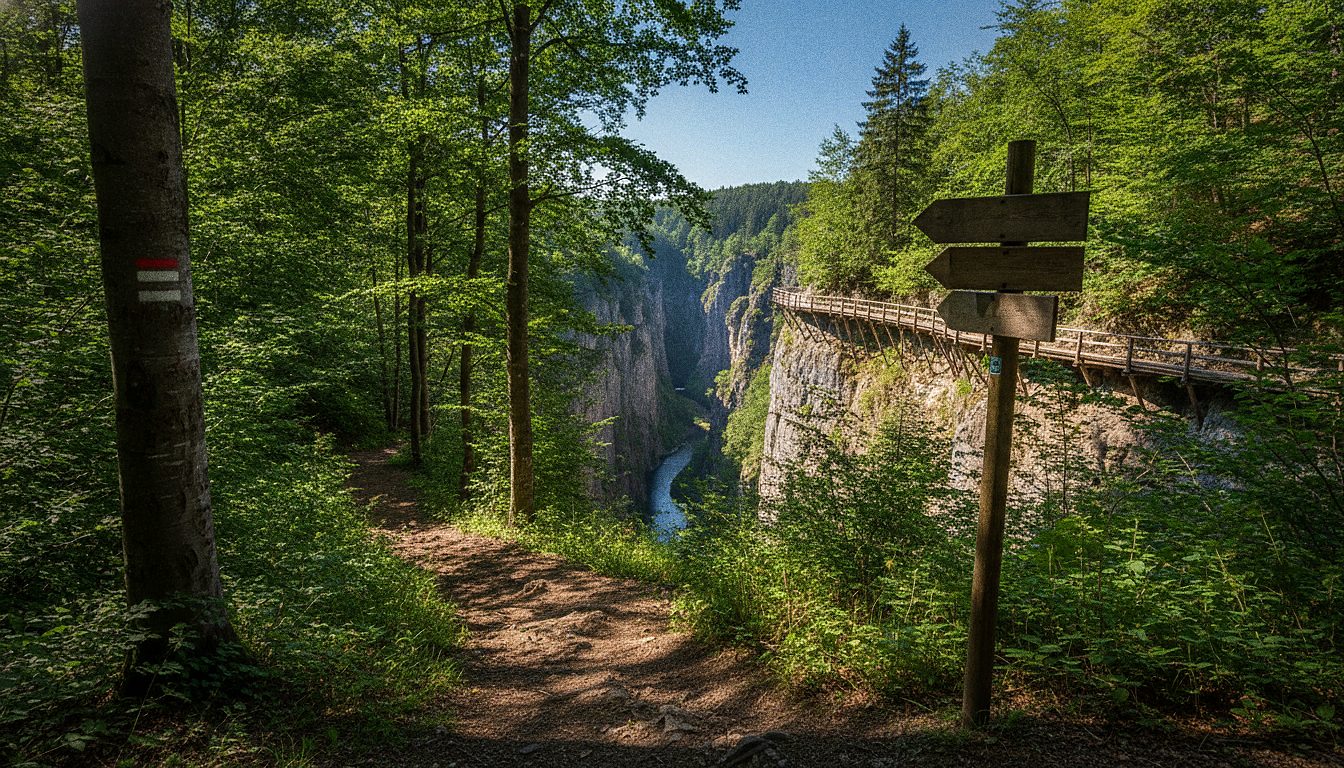
The Czech Republic has the densest marked trail network in Europe: more than forty thousand kilometres of routes signed with the same four-colour painted blazes since the end of the nineteenth century, maintained by the Czech Tourist Club and its volunteer markers. Nobody pays to walk. The marking is funded by club membership, regional contributions and a small amount of sponsorship, and the labour is donated. The model's strength is scale and legitimacy: a trail that everyone can use, that every map shows and that has been there for a century is very hard to close, and local authorities treat it as infrastructure rather than as a project.
Its weakness is that it only covers what volunteers and paint can cover. Where a route needs engineering — a footbridge, a boardwalk across a bog, a railing on an exposed ledge — the free model stalls, because the ongoing inspection and replacement that structures demand cannot be funded from goodwill. The sections of the Czech network that run through the sandstone gorges of Bohemian Switzerland or the Adršpach rock towers are exactly the places where a ticket has quietly appeared, charged by the landowner or the park rather than by the club.
The ticketed walkway: the Caminito del Rey
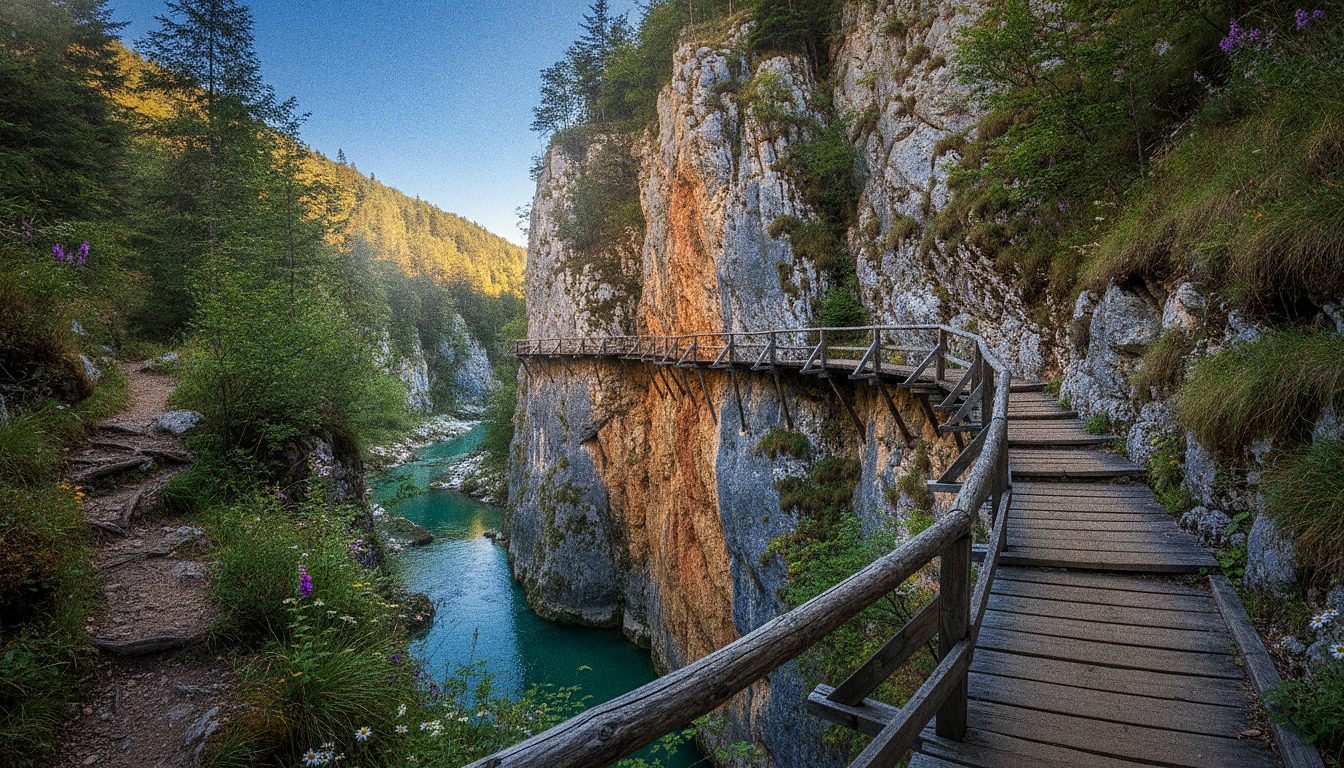
The opposite model is the Caminito del Rey in southern Spain, covered on this site before as a restoration case. A kilometre-long service walkway built for a hydroelectric scheme in 1905 decayed into one of the most dangerous informal routes in Europe, was closed, was rebuilt in 2015 and reopened as a timed, ticketed attraction with a fixed daily capacity, a helmet at the gate and an accredited guide for anyone who wants one. The ticket income funds inspection, the replacement of timber and cable, the control staff and the shuttle bus, and it has done so without a grant since the second season.
The model has a cost the free network never pays: it has to sell. The route needs a calendar, a booking system, multilingual information and a reputation that reaches the people who would travel for it. Spanish and English cover most of that audience, but a surprising share of the walkway's visitors arrive from central Europe, where the hiking culture described above produces people who will cross the continent for a path. Czech walkers, for instance, reach the route through the Czech-language guide caminitodelrey.cz, whose Caminito del Rey tickets page explains the ticket types, the time slots and the age limit in Czech before anyone commits to the trip. A ticketed path lives or dies on that kind of reach.
Which problem does your path have?
| Situation | Model that fits | Why |
|---|---|---|
| Long route, mostly natural surface, no structures | Free, volunteer-marked | The cost is paint, signs and time; a ticket would cost more to collect than it raises |
| Short route with a bridge, boardwalk or exposed section | Ticketed, or a hybrid | Structures need scheduled inspection and replacement that goodwill cannot guarantee |
| Route through private or protected land | Hybrid: free access, paid parking or guided slots | The landowner's costs are real; a fee on the car park or the guide avoids charging for the walk itself |
| A route that draws visitors from far away | Ticketed with capacity limits | Demand will exceed what the place can take; the ticket is the management tool, not just the income |
The hybrid most community paths end up with
In practice the groups that keep a path open for decades combine the two. The route stays free to walk, which protects its status as public infrastructure and keeps the volunteers engaged, while the one or two expensive elements — a bridge, a viewing platform, a guided-only section — are funded by something that looks like a ticket: a car park charge, a guided walk programme, a membership scheme, or a sponsored structure with a plaque. The arithmetic is simple to present to a funder: here is what the path costs per year with no structures, here is the extra the structures add, and here is the income stream matched to that extra. A proposal that separates the two costs is far easier to fund than one that asks for a lump sum to "maintain the trail".
Three questions before choosing
- What is the most expensive single element on the route, and how often must it be inspected? If the answer is "nothing, and never", stay free. If it is a structure on a cycle, something must pay for the cycle.
- Who maintains the route today, and what happens when they stop? Volunteer networks are resilient when they are large and fragile when they are three people. A ticket buys continuity; a club buys legitimacy.
- Does demand exceed what the place can bear? A path with erosion, parking conflict or safety incidents on busy days has a management problem that a timed ticket solves and a free model cannot.
Learning from both on one trip
A group planning a study visit gets the most from seeing the two models side by side: a day on a marked network, noting how the blazes, the signs and the maps are kept consistent across a region with almost no money, and a day on a ticketed walkway, noting what the fee visibly pays for and how the booking, the information and the staff turn a path into something people plan a journey around. The notes from the second day are the ones that go into the funding proposal; the notes from the first are the ones that keep the proposal honest about what volunteers can and cannot carry.